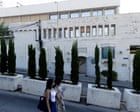
Forced closure marks low point in UK-Israeli relations, with reports UK is considering retaliatory expulsion of Israeli diplomats from London The UK consulate in East Jerusalem gave few signs it was at the centre of a geopolitical controversy this week, with little movement around the high-walled building save the fluttering of the union jack and the occasional car exiting the compound. The mission is to shut its doors on Thursday after Israel ordered its closure in response to a UK ban on trade with illegal settlements in the occupied West Bank and sanctions on those who help build or finance them. Continue reading...
‘Palestinians will bear the cost’: UK consulate in East Jerusalem prepares to shut its doors
Source: The Guardian
Original reporting
The Guardian: read the full reportFollow this story
Earlier reports and follow-ups on the same developing story.
- Israel’s deadline to close UK consulate in East Jerusalem nears
- Video: Signs removed from British consulate in occupied East Jerusalem
- Watch: Why was the sign at the British consulate in East Jerusalem removed?
- Has Israel shut the UK consulate in East Jerusalem – or downgraded it?
- British consulate in East Jerusalem will stay open as UK mission, says Ed Miliband
- Israel shuts down British consulate in occupied East Jerusalem
Related stories
NPR Politics
How to think about the midterms — and the political moment the country is in
Polls show Democrats with an advantage in the midterm election but there are potential limitations and results may take a while to roll in.

NPR Politics
Judge tosses Trump's attempt to block Alaska Senate results if GOP incumbent loses
A federal judge has dismissed a highly unusual lawsuit by the Trump administration that tried to block the certification of results from Alaska's U.S. Senate race if the Republican incumbent lost.

NPR Politics
The midterms will test the nation's political direction and confidence
At least some portion of the nation is likely to have its political confidence — and perhaps even its sense of security — tested in the days and weeks ahead. That test could also continue for some time to come.
The Guardian
How Rachel Reeves has mapped out economic agenda for Andy Burnham’s government
On Brexit, devolution and investment, the former chancellor is eerily in tune with the man who sacked her Reeves says UK’s future is in the EU Which senior politician has argued that “Brexit did deep damage” and that the government seeks “not to turn back the clock but to look toward a new and stable, future relationship?” It was not Andy Burnham, who has been the torchbearer for thinking the unthinkable on Brexit since he became prime minister. Instead, these are the words of the former chancellor Rachel Reeves, in a lecture six months ago. Continue reading...

BBC Politics2 outlets
Green Party at 'crossroads', says former co-leader
Adrian Ramsay says some new members would be ‘more at home’ in Your Party or Socialist Workers party Adrian Ramsay, the former co-leader of the Green party of England and Wales, has said the party must fix its internal democracy to avoid a takeover by the hard left, saying that some new members “might be more at home” in Your Party or the Socialist Workers party. Ramsay, who has been critical of the handling of the row over a “Zionism is racism” motion passed at the Green party conference, said there were a “small number” of individuals who used “divisive” tactics to influence the party’s agenda. Continue reading...

The Guardian
John Healey says UK apology over historic role in slave trade won’t lead to financial reparations – as it happened
Ahead of a meeting with Commonwealth leaders, Andy Burnham wrote that Britain needed to ‘acknowledge its complicated history’ At the end of his interview with Kuennsberg, Healey was also asked to comment on a potential apology for Britain’s near-250 years of perpetrating the slave trade and why the government should or shouldn’t pay reparations to enslaved people and their countries. Sitting in the grand settings of Number 11 Downing St, Kuenssberg pointed out the lavish interiors: Considering a formal apology doesn’t mean accepting that British people now should accept the financial liability for any party and things that happened hundreds of years ago, in which they had no role. For almost 250 years (1560s-1807), British ships trafficked more than three million enslaved African men, women and children in a state policy backed by the monarchy and parliament. Many were taken to British-o