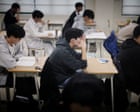
South Korea has been gripped by revelations of AI-aided cheating, just days before more than half a million students are to sit high-stakes entrance exams The integrity of South Korea’s career-defining university entrance exam has been thrown into doubt after the top scorer in a recent professional exam admitted using a concealed camera and AI to cheat. On Thursday, more than half a million people, mostly school students, are due to sit the exam, known as the suneung, at 1,312 centres across the country. The exam runs for a gruelling eight hours over a single day and determines which university a candidate can attend and, in turn, their future prospects. Continue reading...
South Korea’s high-stakes university exams upended by AI cheating scandal
Source: The Guardian
Original reporting
The Guardian: read the full reportFollow this story
Earlier reports and follow-ups on the same developing story.
Related stories

BBC News
Dozens missing after fire at Indonesian factory
At least three people were killed and four injured in a fire at a confectionary factory over the weekend.
The Guardian
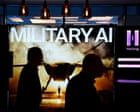
‘Serious error of judgment’: outrage over military AI event at Berlin arts complex
Kraftwerk Berlin, part of same development as techno club Tresor, transformed into ‘war room’ for arms firm event With their cavernous post-industrial venues, teeth-grinding four-by-four beats and bouncers that look like Blade Runner extras, Berlin’s nightclubs trade on a reputation for bleakness. A recent event at one of the city’s most legendary clubland institutions, however, has proven too dystopian even for seasoned techno-heads. On 11 November, the Kraftwerk Berlin arts complex had its central hall transformed into what visitors described as something resembling a war room, with maps and aerial footage projected on to concrete walls, drones hanging from the ceiling, and guards in flak jackets patrolling the premises with sniffer dogs. Continue reading...

The Guardian
Europe is entering a ‘supercycle’ of national elections. Their outcomes could shake the EU’s foundations
The effects of the continent’s coming polls will be felt far and wide – and could well turn into ‘key tests’ of the bloc’s resilience In late 1998, Tony Blair was prime minister of Britain, Lionel Jospin was prime minister of France, and Gerhard Schröder had just been elected chancellor of Germany. The EU had 15 member states and pro-European, centre-left parties were in power – either alone or in coalitions – in all but two of them. Brisk economic growth was lifting living standards. Eastward enlargement was under way. In Washington, Bill Clinton was pursuing the same brand of “third way” centrism as a middle path between free-market capitalism and traditional socialism. The EU felt like it had the tide of history behind it. Continue reading...
Al Jazeera
Kenya’s internet metering bill raises privacy and affordability concerns
Kenya’s proposed internet metering law has prompted concerns over privacy, surveillance and rising connectivity costs.

BBC News3 outlets
New draft deal aims to avert collapse of talks at climate summit
The UN COP31 meeting in Turkey enters a second day of overtime as countries struggle to reach an agreement.
Al Jazeera
Displaced Darfur families face volatile winter as Sudan aid cuts bite
Sudan's displacement crisis could worsen with winter approaching.