It was feared The Short-Necked Oil Beetle had become extinct in Wales after recent surveys
'Fascinating' rare beetle found in Wales again after 60 years
Source: BBC Science

Original reporting
BBC Science: read the full reportRelated stories

BBC Science3 outlets
Bute House protested by environmental campaigners
A Halloween-themed protest against fossil fuels has targeted the first minister's residence in Edinburgh.
Science Daily
A mysterious 4,000-year-old wall is rewriting North Africa’s history
A remarkable 4,000-year-old defensive structure discovered in Morocco is rewriting what scientists thought they knew about ancient North African civilizations. The massive fortifications reveal unexpectedly sophisticated prehistoric societies and suggest that the region played a much greater role in Mediterranean history than previously recognized.
Science Daily
Scientists discover metals that defy the deep freeze at -424°F
Scientists have discovered a surprising mechanism that allows certain metals to resist cracking at temperatures as low as -253°C (-424°F), when similar materials typically become dangerously brittle. Instead of breaking, two experimental alloys reorganize their internal structures, creating new ways to absorb stress and remain flexible.
Science Daily
75,000-year-old Neanderthal may have been killed by a spear aimed at the heart
A Neanderthal who died 75,000 years ago may have been killed by a wooden spear deliberately aimed at the heart, revealing rare evidence of prehistoric violence. A circular hole in the shoulder blade suggests the weapon pierced the chest and caused a rapidly fatal injury. Surprisingly, the same individual had survived an earlier devastating facial injury, suggesting other Neanderthals provided care and support.
Science Daily
Scientists discover a bacterial defense so strange they thought it was broken
Scientists have discovered a bizarre bacterial defense system that works almost completely backward from anything seen before. Unlike typical bacterial immune systems that keep a deadly toxin under control until a virus attacks, this unusual mechanism waits until an infection begins before producing the DNA that switches on its lethal weapon. The infected bacterium then destroys itself, preventing the virus from multiplying and spreading to neighboring cells.
NPR Health
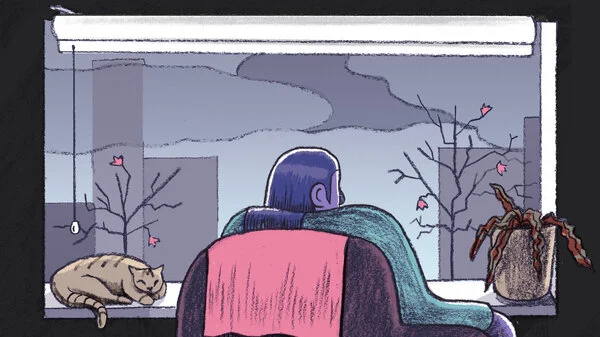
Do you have seasonal affective disorder? How to tell — and what to do about it
The syndrome can make people feel like a "hibernating bear," says Dr. Norman Rosenthal, who published the first research on SAD. He explains how to identify the symptoms and what to do to feel better.